Thought Leadership
Is Your Website Your Conversion Hub or Your Brochure?
By Alicia Darrow and Cass Moore

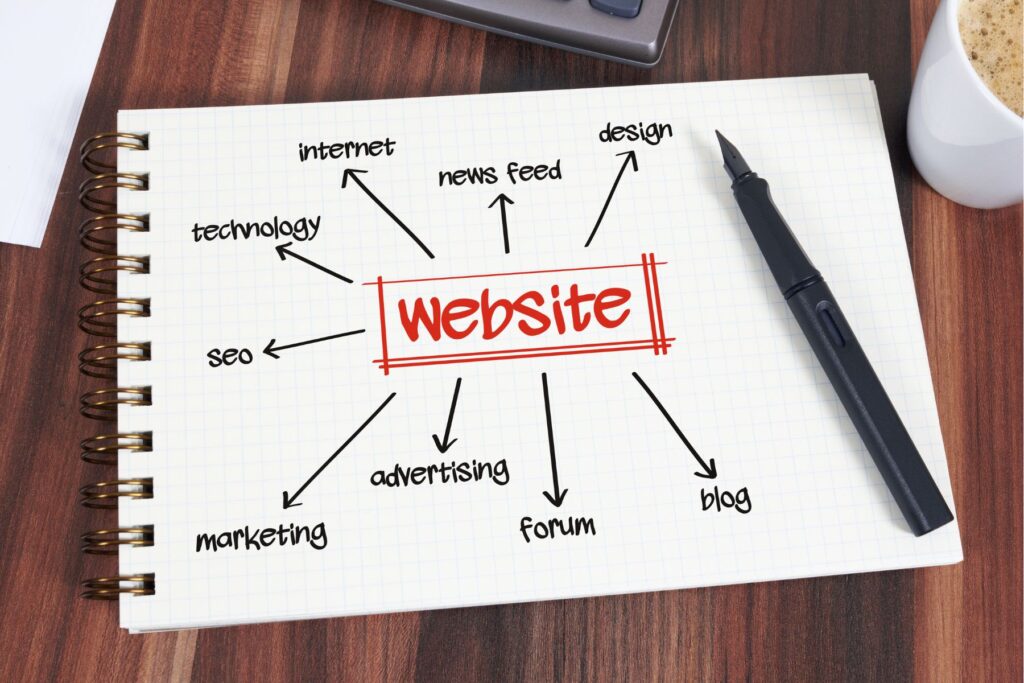
It’s true: your website is the first proposal you will ever write for a client who is deciding whether to invite you into a conversation. And, it’s provocative to think about it this way.
Many websites are treated as a description of what a business does. However, that is not what an effective, hard-working website does.
When an evaluator, a potential client, or a decision-maker lands on your site, they are trying to answer one question fast: is this the team worth serious consideration? If the answer is not clear within seconds, they leave. And they may not come back.
The four things a hard-working website gets right
It does four things well; it:
- Tells you immediately what the organization does and for whom
- Provides credibility through specific, recent evidence and subject matter expertise: case studies, project descriptions, client work that shows capability, and thought leadership
- Makes clear who their people are and why they are the right people to perform the work
- Gives the visitor a reason to take a next step through a call to action (CTA)
Most websites do some of these things partially. Few do all of them well. The gaps are usually in the evidence: organizations that have done strong work but have not made the time to document it. Case studies that don’t exist or are dated. Testimonials have been collected without being published.
We have seen firms with impressive track records that were not verifiable anywhere on their site, which means an evaluator who does not already know them has no way to build confidence.
If a visitor lands on your site and cannot quickly find what you do and why you are credible, they leave. And they go somewhere else. A chaotic or underdeveloped website signals an organization that has not yet decided to take itself seriously.
The thought leadership connection
Your website is where the ecosystem comes together. A LinkedIn post creates awareness and drives curiosity à A thought leadership article, hosted on your site, converts that curiosity into credibility à A case study converts credibility into confidence à The post gets people in the door à The site is where the case gets made.
This means the site must be doing its part. If someone reads a strong post, clicks through, and lands on a page that has not been updated in two years, the signal they receive is that the post was a one-off, not evidence of a consistent practice. The site reinforces what the content is building.
The update problem
Small and mid-sized organizations struggle here for a predictable and understandable reason: nobody owns it. The website gets built, goes live, and then quietly becomes obsolete. A team member updates it when they have time, which means it updates inconsistently and without strategic intent.
The most practical approach we have seen is systematizing the content creation process so that updates happen as a byproduct of the work. The moment a project is won is the right time to create the foundation of the case study, using material already in hand from the proposal process. By the time the project closes, the case study is nearly written. That reusable content strengthens the website, the next proposal, and the firm’s credibility simultaneously.
The hardest thing to get right
Treating the website the same way you would treat any other channel: with intention, consistency, and a clear sense of what it needs to do.
Organizations know the value of a strong proposal. They have seen what a polished, well-structured submission can do for a relationship. The website is that submission, running continuously, to every person who is deciding whether to invite you in. Investing in it is a business development strategy.
Every potential client who researches you before reaching out is reading a document you have not updated in two years. That is the first impression you are making.